
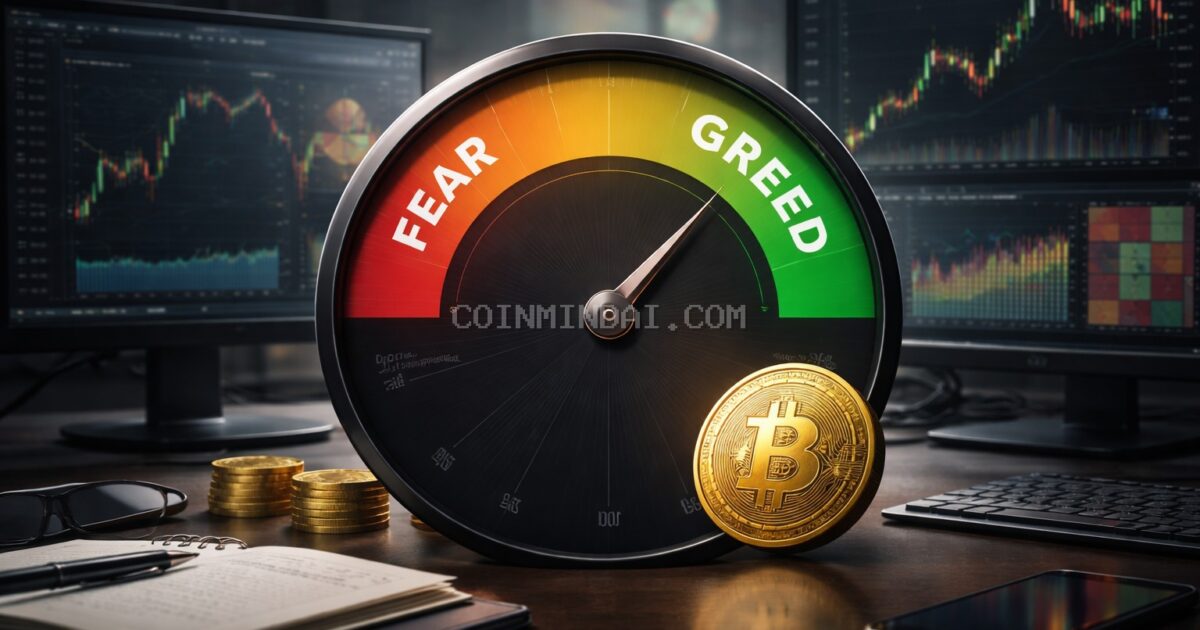
Every market cycle produces the same pattern: investors buy too late when excitement peaks and sell too early when panic sets in. The Fear and Greed Index exists to make that emotional cycle visible.
Understanding how to read it properly can change how you react to market noise, even if it never tells you exactly what to do next.
What the Fear and Greed Index Actually Measures
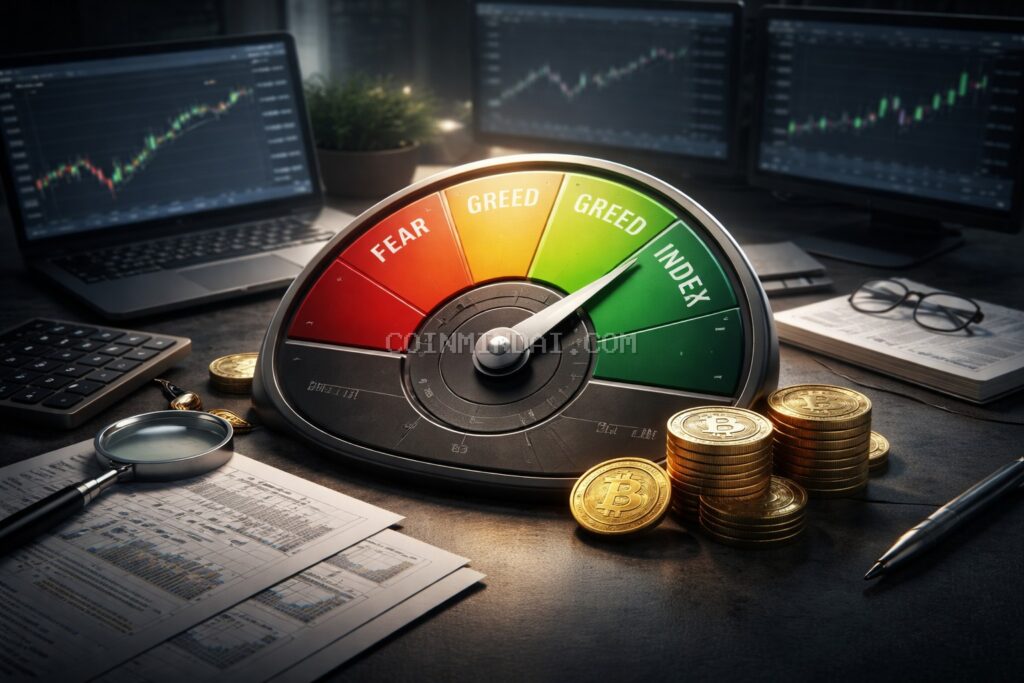
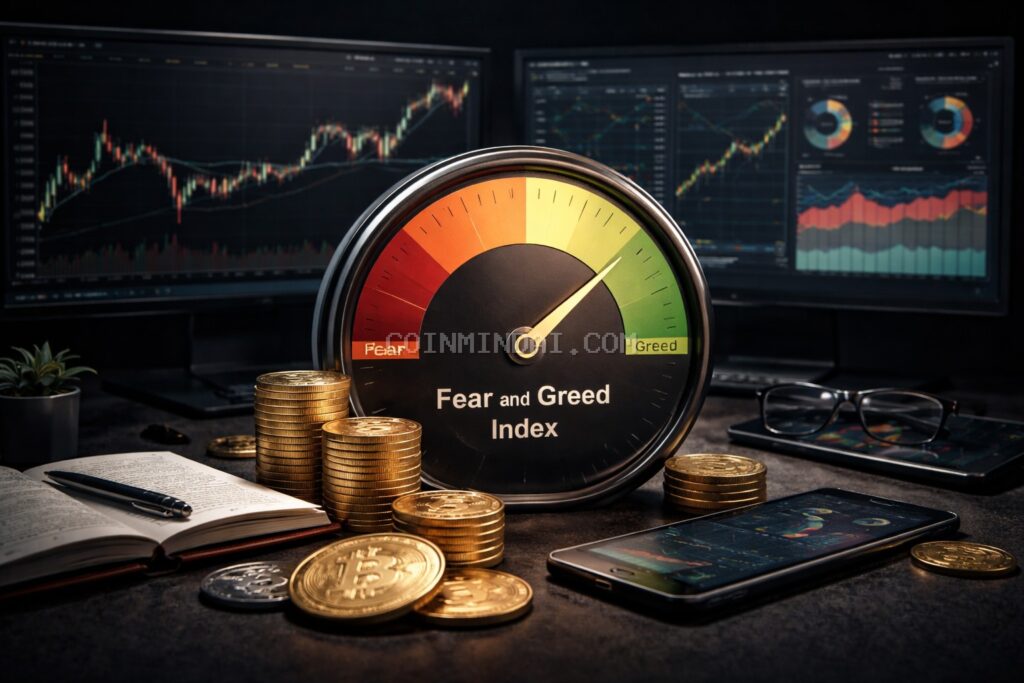
The Fear and Greed Index is a single composite number, usually displayed on a scale from 0 to 100, that tries to capture the overall emotional state of the crypto market at any given moment. A score near zero signals extreme fear, meaning most participants are anxious, selling, or sitting on the sidelines.
A score near 100 signals extreme greed, meaning the crowd is euphoric and buying aggressively.
The original concept was popularized in traditional finance by CNN’s Money Fear and Greed Index for stocks. In crypto, Alternative.me adapted the model for Bitcoin and the broader digital asset market.
The index is not a price prediction tool. It is a sentiment snapshot that shows you where crowd psychology currently sits on the emotional spectrum.
Think of it like a thermometer for market mood. It does not tell you whether to open a window or turn on the heat.
It only tells you the temperature.
How the Index Is Calculated in Practice
The crypto Fear and Greed Index pulls from several data inputs, each weighted to produce the final score. The most commonly used components include price volatility, market momentum, social media activity, Bitcoin dominance, and Google search trends.
Some versions also factor in on-chain transaction volume or survey data.
Volatility is typically the heaviest component. When Bitcoin’s price swings sharply in a short period compared to its recent averages, the index interprets that as a fear signal.
When momentum is strong and prices are rising steadily, the score shifts toward greed territory.
Social media sentiment, usually measured through engagement volume and tone on platforms like X (formerly Twitter) and Reddit, gives the index a real-time layer. A sudden spike in crypto-related posts often precedes or accompanies greed readings.
The combination of these signals produces a single number updated daily, sometimes multiple times per day during periods of high volatility.
Why This Indicator Still Matters in Any Market Condition
Crypto markets move fast and sentiment can shift within hours. The Fear and Greed Index gives investors a quick, repeatable reference point without requiring them to scroll through social media or watch price charts all day.
That accessibility is part of its lasting value.
Contrarian investors have long used sentiment indicators like this one to identify potential turning points. When the index reads extreme fear for several consecutive days, historically that has often corresponded with accumulation zones rather than the beginning of a deeper collapse.
When it reads extreme greed for an extended stretch, experienced traders start tightening their risk management, not doubling down.
Current context note: As of early 2026, crypto markets have moved through multiple sentiment swings tied to macroeconomic uncertainty and institutional adoption cycles. The index remains one of the most-checked free tools in retail investor toolkits precisely because it aggregates noise into a single readable signal.
It also works as a discipline check. If you feel the urge to chase a rally and the index already reads 85 or higher, that number can slow you down long enough to reassess your position sizing instead of acting purely on excitement.
Common Mistakes Investors Make When Using the Index
The biggest mistake is treating the index as a buy or sell signal in isolation. A reading of extreme fear does not guarantee prices will recover tomorrow.
Markets can stay fearful for weeks or months, and the index will reflect that the entire time. Acting on a single data point without broader context is how many investors buy into a prolonged downtrend thinking they found the bottom.
Another common trap is confirmation bias. Investors in heavily long positions often look at a greed reading and use it to feel validated rather than cautious.
The index works best as a counterweight to your existing assumptions, not a confirmation of them.
Timing trades purely off the index is also unreliable. The score tells you where sentiment is, not when it will change.
Two investors looking at the same fear reading of 18 might reasonably take opposite positions based on their time horizon, risk tolerance, and overall portfolio context. The index is context, not a strategy.
Finally, many beginners apply the crypto Fear and Greed Index to individual altcoins. The index is built primarily around Bitcoin sentiment and broad market data.
It is less reliable as a direct signal for smaller assets that trade on their own project-specific narratives.
What Investors Should Actually Monitor Alongside the Index
To use the Fear and Greed Index effectively, pair it with at least two or three other reference points. Bitcoin dominance is a natural complement.
When dominance rises during a fear period, capital is consolidating into Bitcoin rather than leaving the market entirely, which carries a different implication than dominance falling during fear.
On-chain data from tools like Glassnode can show whether long-term holders are accumulating or distributing during a given sentiment phase. A fear reading combined with long-term holder accumulation data is a stronger signal than either one alone.
Macro context also matters. Fear readings during a broad financial market contraction differ significantly from fear readings during a crypto-specific correction.
Watching the index over a rolling seven-day or thirty-day window rather than a single daily reading gives you a more reliable picture of where sentiment is trending, not just where it landed on one afternoon.
A score rising from 22 to 45 over two weeks says something very different than a score that has held between 20 and 25 for thirty days straight.
Volume trends and funding rates on perpetual futures markets round out the picture well. Negative funding rates combined with extreme fear readings have historically pointed toward short-squeeze setups.
These combinations give the index more practical weight than reading it in isolation.
Frequently Asked Questions
What does a Fear and Greed Index score of 50 mean?
A score of 50 represents a neutral market sentiment, meaning neither fear nor greed is clearly dominant. It suggests the market is balanced between buyers and sellers without strong emotional direction in either camp.
Is the Fear and Greed Index accurate for predicting price movements?
The index does not predict prices. It measures current crowd sentiment, which can be a useful input for decision-making but carries no forecasting guarantee.
Prices can fall further even during extreme fear and can keep rising even during extreme greed.
How often is the crypto Fear and Greed Index updated?
Most versions of the index update once per day, typically reflecting the previous 24 hours of data. During volatile market periods, some trackers publish intraday updates as well.
Where can I check the Fear and Greed Index for free?
The most widely referenced free source is Alternative.me, which publishes daily scores and historical data. CoinMarketCap and several crypto data aggregators also display the index directly on their dashboards.
Data tracking: The most commonly used free source for the crypto Fear and Greed Index is Alternative.me, which provides daily scores, historical charts, and an API feed. CoinMarketCap embeds the index on its homepage. For deeper sentiment layering, Glassnode covers on-chain behavioral data, while TradingView allows users to overlay sentiment indicators with price charts. CoinGecko also displays market sentiment data alongside volume and dominance metrics.
Bottom line: The Fear and Greed Index is a simple, accessible tool that translates complex market emotions into a single readable score. Used alongside other data points and a clear investment framework, it helps investors stay aware of crowd psychology without being swept up in it. It works best as a discipline tool, not a trading signal.
Not Financial Advice: This article is for informational purposes only. Crypto assets carry significant risk. Always do your own research before making investment decisions.