
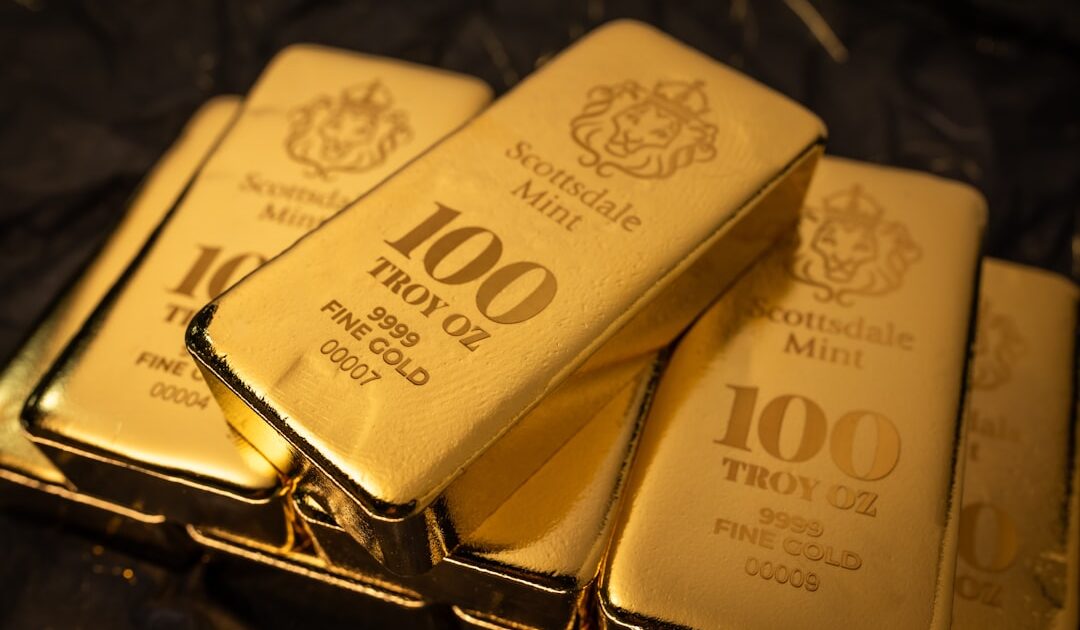
Gold Price Today: March 20, 2026
Gold trades at $4,687.07 per ounce during Thursday morning's session, reflecting sustained demand for precious metals amid heightened global uncertainty. The yellow metal continues to benefit from its traditional role as a hedge against geopolitical instability and currency debasement concerns.
Spot gold maintains its elevated position while the US Dollar Index hovers around 104, creating a complex dynamic for international investors seeking portfolio diversification.
The precious metal's resilience at these levels suggests underlying structural support from central bank purchases and institutional allocation strategies.
Technical Picture: Support, Resistance & Key Thresholds
The current price action positions gold near historically significant territory, with immediate support establishing around the $4,650 level. Price consolidation above this threshold indicates buying interest remains robust despite the elevated valuation.
Resistance appears concentrated in the $4,720 to $4,750 zone, where previous rally attempts have encountered profit-taking pressure. A decisive break above $4,720 could signal renewed momentum toward the psychological $4,800 milestone.
Technical indicators suggest the precious metal remains within an established upward channel, though momentum oscillators hint at potential near-term consolidation. The 50-day moving average continues to provide dynamic support for any pullback scenarios.
Why Is Gold Moving? Regional Conflicts Reshape Safe Haven Flows
Middle Eastern tensions have intensified following recent diplomatic breakdowns between key regional powers, prompting renewed concerns about energy supply disruptions and broader stability. These developments traditionally favor gold as investors seek assets uncorrelated with geopolitical risk exposure.
Simultaneously, US-China trade dynamics have deteriorated following new technology transfer restrictions announced by the Biden administration.
The escalating rhetoric between Washington and Beijing creates uncertainty around global supply chains and economic cooperation frameworks that historically supported risk asset valuations.
OPEC+ discussions regarding production quotas have added another layer of complexity to commodity markets, with energy price volatility spilling over into precious metals demand.
Central banks across emerging markets have accelerated gold accumulation as a hedge against potential sanctions exposure and dollar weaponization concerns.
Fed Chair Jerome Powell's recent comments regarding inflation persistence have also influenced precious metals positioning, as traders and investors assess the implications for real interest rates.
The combination of geopolitical uncertainty and monetary policy uncertainty creates a supportive backdrop for Live Gold Analysis on CoinMindAI discussions.
Investor Question: What Happens to Gold Next?
The trajectory for gold investment appears increasingly linked to geopolitical developments rather than traditional monetary policy drivers. Currency wars between major economies could accelerate precious metals demand as nations seek alternatives to dollar-denominated reserves.
European Central Bank officials have indicated growing concern about sanctions-related financial system fragmentation, potentially supporting central bank demand for gold reserves. This institutional buying provides a fundamental floor for prices even during periods of technical weakness.
Short-term volatility should be expected as traders navigate conflicting signals from traditional correlations breaking down. The relationship between gold and real yields has become less predictable amid unprecedented fiscal and geopolitical circumstances affecting global markets.
Short-Term Outlook & Conclusion
Gold forecast scenarios remain tilted toward continued strength as geopolitical risk premiums expand across multiple regions simultaneously. The convergence of Middle Eastern instability, trade war escalation, and currency market dysfunction creates a uniquely supportive environment for precious metals.
Immediate price action likely depends on developments in ongoing diplomatic negotiations and potential military escalations that could reshape energy markets. XAU USD positioning suggests institutional investors are prepared for extended periods of elevated uncertainty requiring safe-haven exposure.
The current environment reinforces gold's role as portfolio insurance against systemic risks that traditional asset classes cannot adequately hedge. Sustained demand from both institutional and retail sectors indicates the precious metal's relevance remains intact despite evolving market dynamics.
Analysis incorporates spot gold pricing data, US Dollar Index readings around 104, and current geopolitical developments affecting commodity markets and safe-haven asset demand patterns.
Not Financial Advice: This article is for informational purposes only. Gold investments carry significant risk.
Consult a licensed financial advisor before making investment decisions.